
Arts Blog by Sabra Comins
August 2026 – Listening to the River
I am missing my damselfly. She used to float into my garden like a drop of cool water with see-through wings pressed along her cerulean body, and perch atop chive blossoms.
Now, the sun blasts down on crispy leaves and bronzed redwood debris. My mouth feels sticky. My skin is dry even though my hat is ringed with salty sweat stains. I know a damselfly doesn’t change the air temperature, but I felt cooler in her presence as though she brought a splash of Dixon Creek with her from two blocks away.
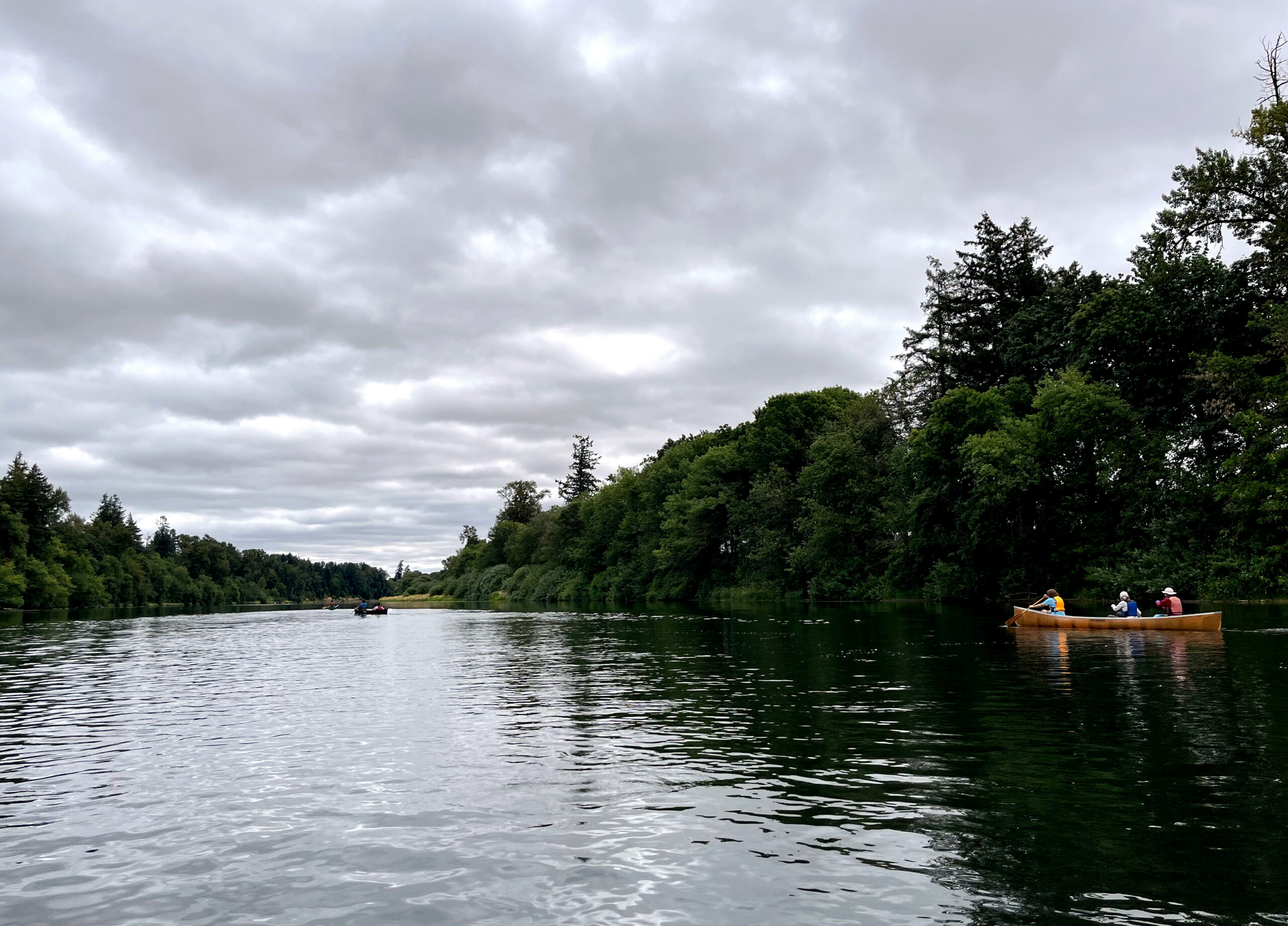
In search of damselflies and inspired by John Macfarlane’s new book, Is a River Alive? I sign up to Paddle and Pull with the Willamette Riverkeepers. This non-profit organization focuses on restoration and protection of the Willamette River while also offering recreational opportunities. They believe that building a love for a river leads to stewardship of a river.
We gather at Michael’s Landing, mile 131 on the Willamette River. Volunteers and guides share what they like about being on the river: bird watching, rock hounding, fishing, Paddle and Pull days, and any excuse to be on the water. Many participants are returning for a second or third restoration event.
As we begin our paddle, belted kingfishers guide us by chattering loudly along the wooded banks. Killdeer call from gravel shores; Osprey fly overhead scanning for fish.
Does the presence of life along a river make the river alive? If imagining a river alive is difficult, Macfarlane suggests envisioning a dead river. It might be a river devoid of life in and around it, susceptible to burning, or unable to reach the sea.
We stop at a gravel bar to eat lunch and learn about ludwigia, the invasive plant we’ll be pulling. Ludwigia is a fast growing aquatic plant native to Central and South America that was likely first brought here for use in fish ponds. It forms a dense cover over the water’s surface, which inhibits native plant growth and can close off backwaters, a critical habitat for juvenile fish.
In Macfarlane’s quest to answer the title of his book, he investigates different river systems around the world and asks throughout his travels, What is the river saying?
We share reflections like this in our monthly newsletter. If you’d like to receive them, you can subscribe here.
Further downstream, we pause at a cove full of wapato, the native plant highly valued by indigenous communities. Both narrow leaf and broadleaf wapato grow here, naturally reclaiming the area after ludwigia was removed. Our guides exclaim at this success and affectionately call the site Wapato Cove. I listen to hear what the river is saying; human voices, swirling water gurgles from paddles, and rustling wapato leaves flood my senses.
At Dragonfly Cove, we paddle single file through shallow water dense with underwater vegetation. When the cove widens, we spread out to fill thick black garbage bags with ludwigia. The plants near land are knee high with yellow blossoms; younger spindly plants grow more central in the cove.
My boat goes for the young ones. We inch along, giving a pulsing tug to loosen the ludwigia roots from the mucky bottom. I love how pulling up one leafing branch has a far-reaching effect by bringing in several arms of the plant at once.
The water feels hot. Minnows and polliwogs swim clear of my hands; dragonflies and damselflies criss-cross through the air in search of prey. A gravelly animal sound emanates from the woods, growing louder as a great blue heron flies in. I imagine a rookery full of hungry begging young herons.
Macfarlane reports that Ecuador has a Constitutional Ruling that recognizes the Rights of Nature, including the rights of a river to flow. The rights of the Willamette River to flow. I wonder how this kind of governance might change our relationships with the Willamette.
At Hyak Park, mile 122, we pile up our ludwigia-filled bags for disposal by Oregon State Parks. I imagine my day mirroring a damselfly’s. She leaves water to visit my yard on land while I seek her presence on the water.
The river comes home with me as mud and memory. In my garden, I watch for the drop-of-water damselfly to return. A dragonfly darts in instead. This stout blue-bodied visitor perches with wings held out to the sides; large green eyes swivel in search of prey. Attentive to this ambassador, I begin to ascertain what the river is saying, and like Macfarlane, I choose to “deepen and widen the category of ‘life’” and see the river alive.
Sabra
If this piece resonated with you, we invite you to stay connected through our monthly newsletter.
Explore our past blog posts below.
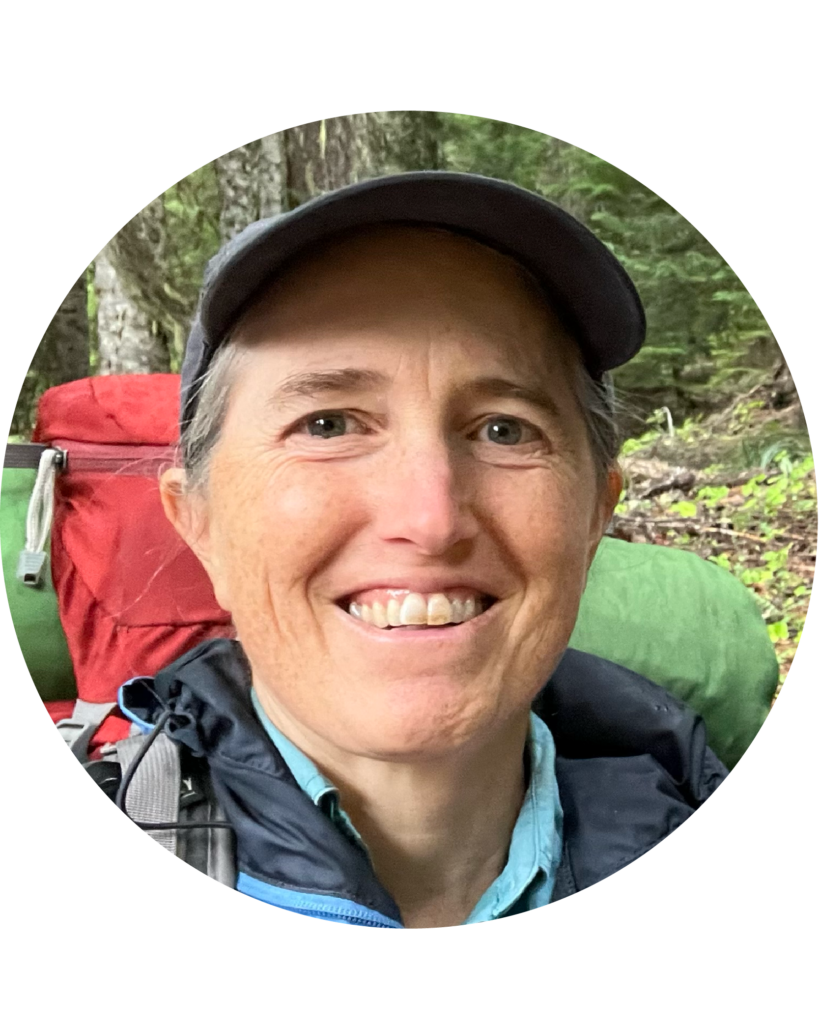
Sabra Comins weaves her natural science background, curiosity of human behavior, and thoughtfulness toward all beings in her writing and art. She has been involved with The Arts Center since moving to Corvallis in 2018. Sabra completed TAC’s Artist Accelerator Program in 2020, and currently leads Unlocking Art activities and serves on the Exhibition Committee. When Sabra is not outside or in her studio, she is likely to be sending letters in handmade envelopes.